A Buyer’s Guide to Fitness Mats: What Quietly Matters
Active Living · The Equipment DeskI have, over the past decade, owned eleven fitness mats. This is not because I am particularly devoted to the form. It is because most of them were quietly wrong, and I kept replacing them in the hope that the next one would be the last. What I have come to believe is that buying a mat is mostly an exercise in honesty: about how much space you have, what surface lives under your feet, and what kind of movement you actually do.
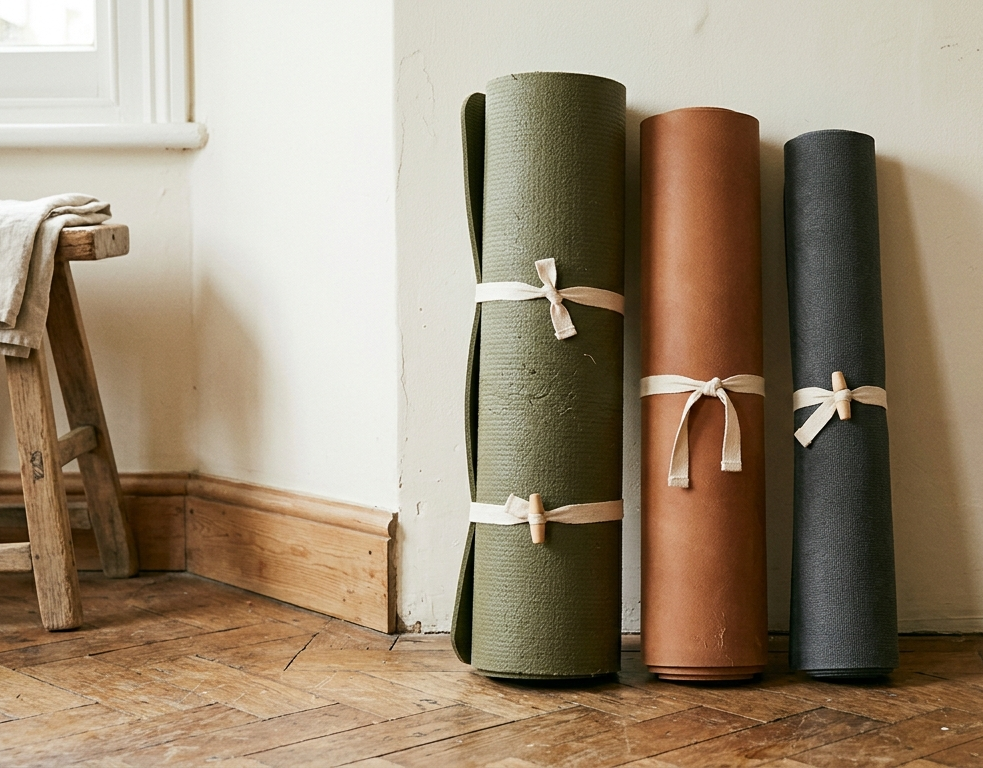
1. Thickness Is the First Honest Question
Most retail listings rank mats by colour, brand, or “premium” claims. The number that actually matters first is thickness. A standard yoga mat is around three millimetres; a general fitness mat is around six; a thicker exercise mat for kneeling work is closer to twelve. In my experience, twelve millimetres is the friend of anyone over forty whose knees have started filing complaints.
Thicker is not universally better. A very thick mat is unstable for balance work, and the farther your foot sits from the floor, the more your stabilising muscles have to negotiate. If most of your routine is balance-led — standing flows, single-leg work — lean thinner. If your routine is floor-led, lean thicker.
2. Material: What You Are Sweating On
The honest dividing line in materials is between cheap PVC and almost everything else. PVC mats are inexpensive and durable, but they are dense and not always pleasant against bare skin. TPE mats are lighter, softer, and easier to roll up. Natural rubber mats are the heaviest of the common options and the grippiest, particularly when the room is warm.
“The mat is rarely the bottleneck in a routine; the room around it usually is,” a community-centre movement instructor in Hamilton once told me, and I have repeated it since.
3. Grip: The Single Most Underrated Feature
A mat that slides on hardwood is a mat that lives in a cupboard. The cheapest test you can run before purchase is to lay your hand flat on the rolled mat and try to slide it forward. If your palm and the surface separate easily, you will have the same conversation with your hands and feet during a plank. Grip varies wildly by material and by texture. Natural rubber wins this category in nearly every comparison I have done at home.
Do
- Lay the mat flat in its eventual home for forty-eight hours before judging it.
- Wipe it down weekly with a soft cloth and warm water.
- Store it flat or loosely rolled, never tightly bent.
- Buy a mat sized for your tallest pose, not your average pose.
- Replace when the surface starts to flake; do not nurse a dying mat.
Don’t
- Choose by colour alone.
- Trust a thickness number without standing on it first.
- Use household chemical cleaners on natural rubber.
- Roll the mat the same way every time; alternate directions to keep it flat.
- Buy something so heavy you will never carry it anywhere again.
4. Size: Bigger Than You Think You Need
Standard mats are 173 by 61 centimetres. Most of us are taller, in some direction, than that number assumes. If your fingertips touch the floor beyond the edge of the mat in a forward reach, the mat is too short. I have spent years adjusting myself around small mats. A taller mat — 183 or 200 centimetres — is a small luxury that generally promotes the sense that the practice fits the body, rather than the body apologising to the practice.
5. Weight and Portability
If your mat lives in a single corner of a single home, weight does not matter much. If you plan to carry it to a park, a friend’s living room, or a class, weight matters quite a lot. Natural rubber mats are gloriously grippy and unpleasantly heavy. TPE mats are lighter and happy travellers. According to a small informal survey of our newsletter readers in 2026, the mats most often abandoned in closets are heavy natural-rubber ones bought with travel in mind.
6. Surface Under the Mat
This is the question almost no shopping guide asks. The floor under your mat is half of the equation. A mat on a carpet behaves differently from a mat on a hardwood floor, and a mat on a tile bathroom floor behaves like nothing on earth. If your floor is soft, you can go thinner. If your floor is unforgiving, lean thicker. In my own home, an old hardwood floor with a gentle rug beneath the mat strikes the most comfortable balance.
7. A Note on Budget
You do not need to spend a great deal. In my experience the difference between the cheapest mat in a sporting-goods shop and a thoughtfully chosen middle-priced one is enormous. The difference between a middle-priced one and a premium one is small. Spend up to the point where thickness, material, and grip are honest. Then stop.
Frequently Asked
How long does a good mat last?
With weekly cleaning and respectful storage, a mid-range TPE or natural rubber mat generally lasts three to five years of regular home use.
Are foldable mats worth it?
For travel yes; for daily home use, no. The crease lines tend to lift slightly even after long flat storage.
Does colour matter?
Lighter mats show wear faster but are easier to spot dirt on. In my experience, mid-tones are the most forgiving.
What thickness for older knees?
For floor-based work and kneeling drills, around twelve millimetres is generous and forgiving. For standing flows, around six is more stable.
Need Help Choosing? Book a Free Consultation
We will spend twenty minutes with you on the phone, asking the awkward questions that retailers won’t.
Free consultation with an expertSubscribe to the Gazette
One short letter, every Saturday morning.
Read Also
How to Warm Up During Phone Calls
Quiet drills you can do without anyone knowing.
How to Talk Yourself Into Exercising at Home
The small psychological tricks that keep a routine alive.
Seven Days of Plank: A Diary
An honest week-long log of attempting a daily plank.